How to Organise EV Charger Installation at Your Hotel: A Step-by-Step Guide
Organising EV charger installation at a hotel comes down to six steps, from understanding how your guests stay to telling them the chargers are there. Here is how to plan each one, with examples from hotel groups we have worked with.
Looking to install EV chargers at your hotel? You're not alone. Hoteliers across the UK are asking how to organise EV charger installation without disrupting guests, weddings and events. This guide walks through the six steps we follow with hotels, and what each one decides.
How do you organise EV charger installation at a hotel?
To organise EV charger installation at a hotel, start with how your guests stay, then check your electrical capacity, choose charger speeds to match, place them near the entrance, set a simple guest policy and promote the chargers once they are live. A site survey covers the first three steps in a single visit.
The six steps
Step 1: Assess your guests' charging needs
Before choosing any hardware, understand how your guests use the hotel:
Evaluate demand: ask how many guests already arrive by electric car, and how many enquiries you get about charging. Electric cars are a growing share of new cars on UK roads, so demand at most hotels will rise over the life of the chargers.
Match speed to dwell time: overnight guests usually need a steady charge while they sleep, while restaurant, spa or conference visitors staying two to four hours may need something faster. Most hotels find 22kW chargers meet guests' needs while keeping costs manageable.
Peak times: know when demand is highest, such as weekends, weddings and holidays, so the setup copes on your busiest days.
Step 2: Evaluate your hotel's electrical infrastructure
Next, check what your site can supply:
Check capacity: a qualified installer needs to confirm whether your current supply can support chargers. This is part of our no-obligation site survey. If grid work is needed, it is often the biggest variable in the cost of installing commercial EV chargers.
Plan for expansion: install a system that can grow. Load balancing shares the available power between chargers, and laying extra ducting now makes a second phase cheaper later.
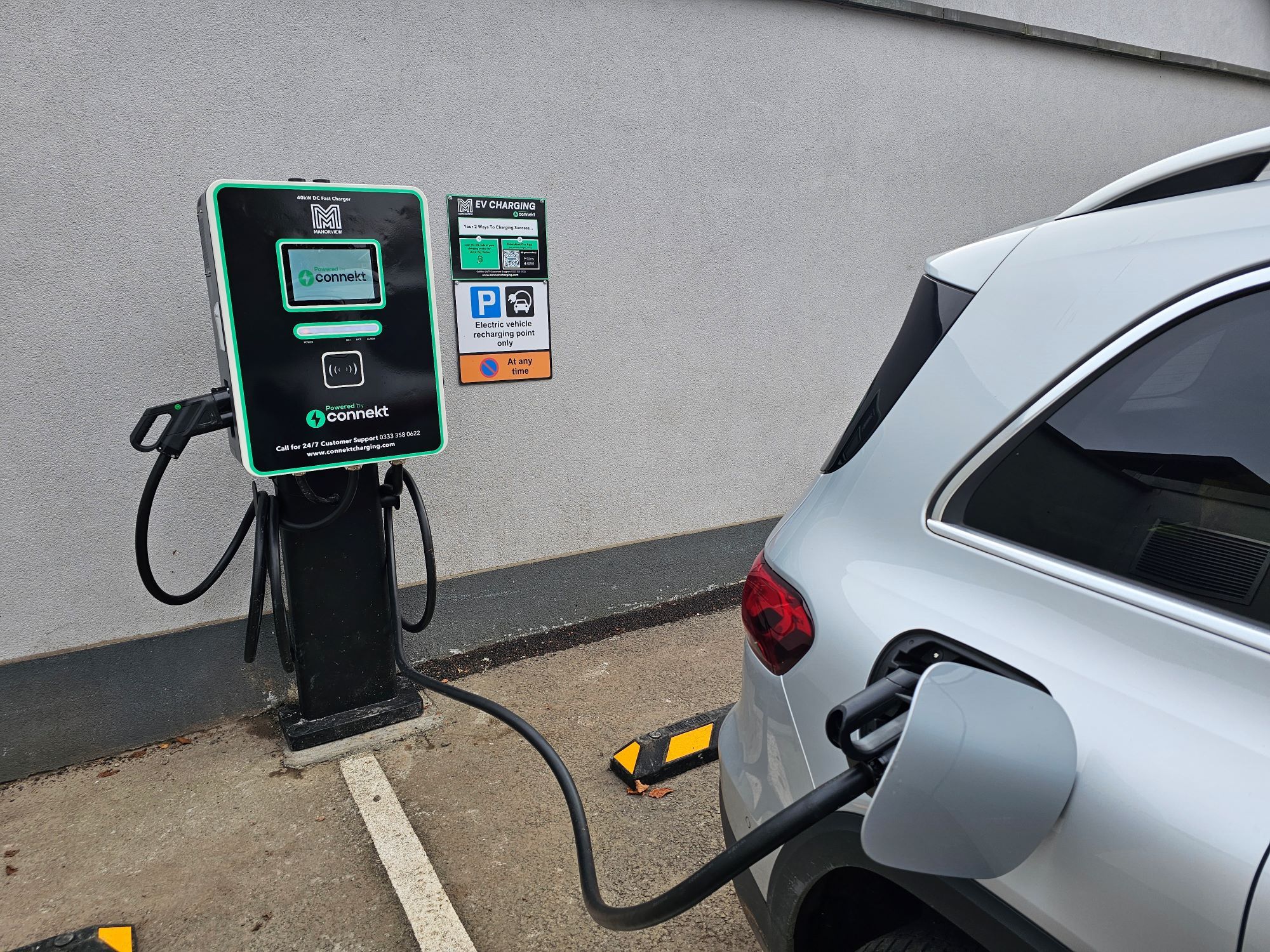
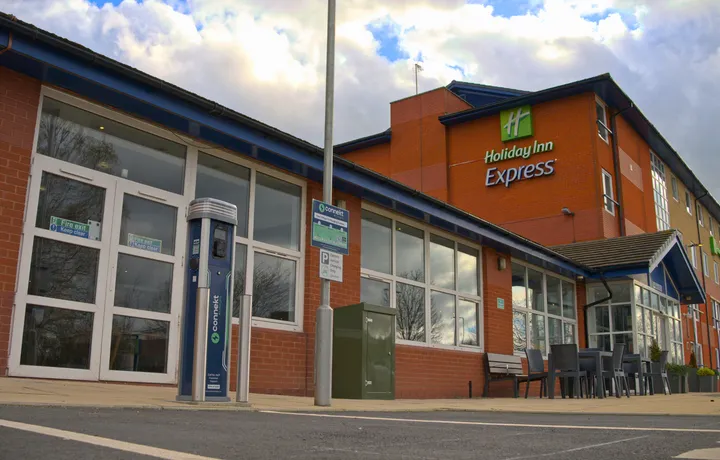
Manorview Group branded chargers, designed and installed by Connekt
Step 3: Choose the right charging solution
Selecting the right chargers shapes the guest experience:
Charging speeds: 7.4kW or 22kW chargers are the most popular choice for hotels, giving a good charge over several hours or overnight. Where guests stay for shorter periods, or the hotel sits on a busy route, a rapid charger may be worth adding.
Think beyond the hardware: decide how charging will be managed day to day, including payment, monitoring and who drivers call when they need help. Our EV charging software page explains how Connekt Cloud handles this.
Step 4: Select the best charging locations
Placement affects how easily guests find and use the chargers:
Designated bays: put chargers in prime spaces close to the entrance or reception, clearly marked for electric cars only.
Guest convenience: think about guests arriving at night or in poor weather. Lighting, signage and a short walk to the door make a real difference.
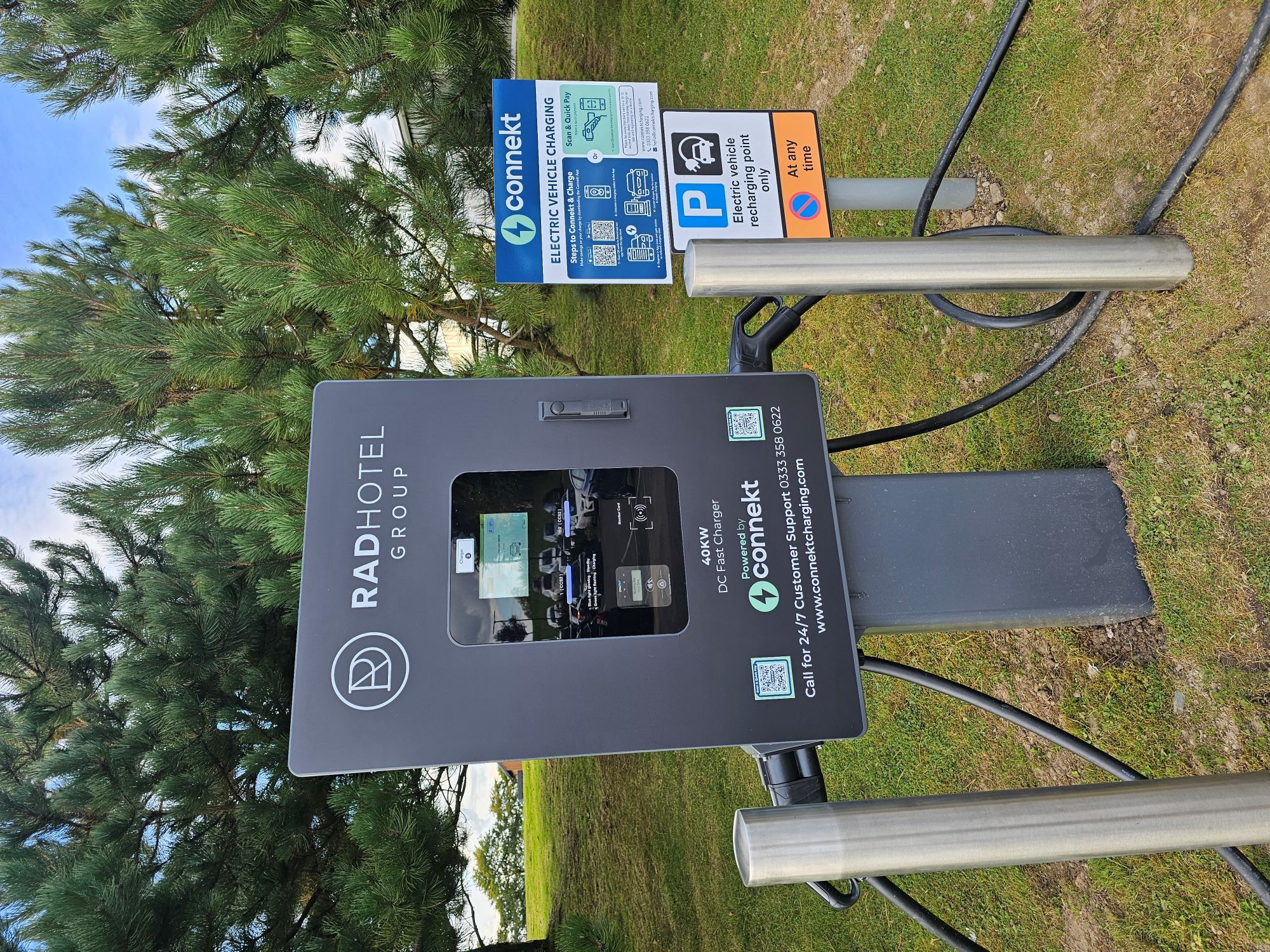
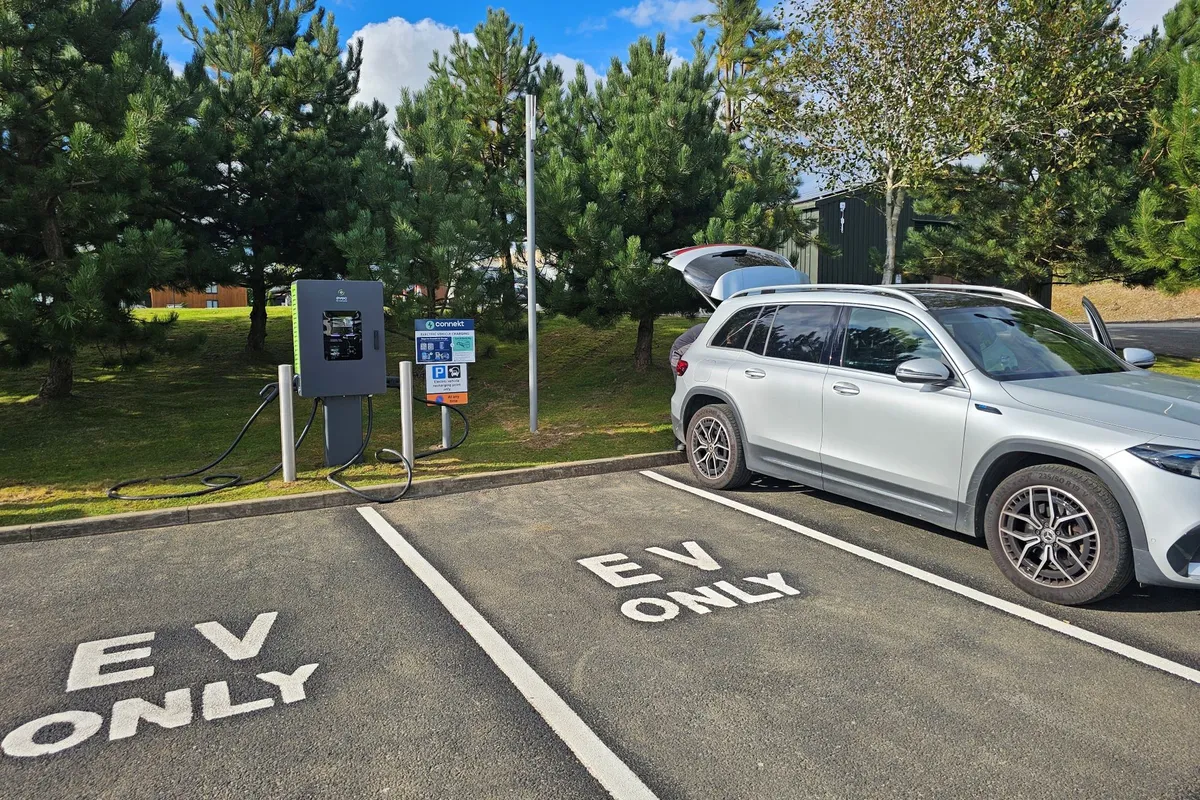
Branded EV chargers at the RAD Hotel Group, Ayrshire
Step 5: Develop an EV charging policy for guests
A clear policy avoids misunderstandings at the front desk:
Decide on pricing: choose whether charging is complimentary or carries a fee. Many hotels set a modest price per kWh to cover costs while still offering convenience.
Set time limits: to stop bays being blocked, ask guests to move once charged, or set an overstay fee. Mention it in booking confirmations and on signs by the chargers.
Check the rules if the public can use them: chargers open to the public must meet the Public Charge Point Regulations 2023, which cover payment, pricing information and a 24/7 helpline.
Step 6: Promote your new EV charging
Once the chargers are live, let guests know:
Update listings and your website: add EV charging to your amenities list, your Google Business Profile and booking platforms such as Expedia.
Highlight it in marketing: mention charging in social posts, newsletters and pre-arrival emails.
Make sure drivers can find you: list the chargers in the apps drivers use, so your chargers show up where drivers look.
A real example: Manorview Hotel Group
None of Manorview Hotel Group's eight venues had charging when they started. Connekt surveyed every venue, looking at guest dwell time and each site's needs, then installed 13 chargers with 22 sockets: 15 at 22kW, three at 7.4kW for overnight stays and four 40kW rapid sockets. Installation crews worked around weddings and guest stays, finishing before guests arrived each day.
At the RAD Hotel Group, Connekt installed 24 connectors across six hotels in three weeks, with load balancing to manage the power supply, while weddings and functions carried on.
Planning around how guests actually use the hotel matters more than the number of chargers you install.
When this isn't the right fit
If your car park is leased, shared with other businesses or due for redevelopment, settle who controls the space first; chargers are a long-term installation. And if very few guests arrive by car, a couple of well-placed chargers may be all you need for now. Our article on what makes EV charging work at hotels covers the common pitfalls.
Frequently asked questions
How long does it take to install EV chargers at a hotel?
The installation itself is often the quickest part once the design is agreed: Connekt installed 24 connectors across six RAD Hotel Group venues in three weeks. The survey, design and any work with the network operator usually take longer, and grid upgrades can add months, so starting early gives you more control over timing.
What size of EV charger is best for a hotel?
For overnight guests, 7.4kW or 22kW chargers usually give a full or near-full charge during a stay. Where visitors stay for a few hours, such as at a restaurant, spa or conference, 22kW or a rapid charger works better. The right mix depends on your guests' dwell times, which is why a site survey comes first.
Do I need planning permission for EV chargers at my hotel?
Often not. Many charger installations in off-street car parks fall under permitted development, but there are limits on size, location and listed buildings, and the rules differ between England, Scotland and Wales. Your installer should check this as part of the survey and tell you if you need consent.
Can we install EV chargers without disrupting guests?
Yes, with good planning. Work can be scheduled around weddings, events and busy weekends, and crews can finish each day before guests arrive, as at Manorview Hotel Group's eight venues. Agree working hours, parking closures and access routes before work starts.
How much does it cost to install EV chargers at a hotel?
It depends on the number and speed of chargers and, above all, on whether your power supply needs upgrading. There are also funding options, some of which can mean no upfront cost. Our guide to commercial EV charger installation costs explains the main factors, or book a call for a figure for your site.
The bottom line
Organising EV charger installation at a hotel is simpler when you follow the steps in order: guests first, then power, chargers, placement, policy and promotion. Get the survey right and the rest follows. To talk through your hotel, book a call.
This article is general information, not electrical, legal or financial advice. Grant eligibility, regulations and tariffs differ across the UK and change over time; check the current position with a qualified installer or the relevant body before acting.